I ask to accept me in members of the International Union of Journalists and writers.
In accordance to the Law of Ukraine «About Protection of Personal Information » I consent to the processing of your personal information.
The Philosophy of Diplomacy in the Face of Chaos: From the Brink of Conflict to the Making of Peace
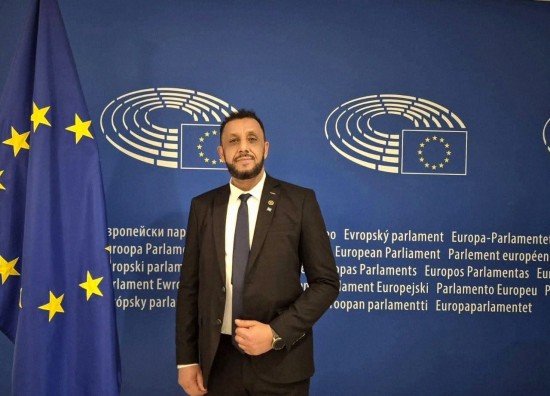
Dr. Saleh Daher
When geography begins to fracture and the fragments of grand concepts scatter, humanity finds itself standing on the edge of a profound abyss created by human hands themselves, under the disguised name of “creative chaos.” At this point, disorder is no longer a blind accident; it becomes a calculated architecture aimed at dismantling the familiar and reshaping maps and balances of power. Within this dark laboratory, diplomacy moves beyond being merely a means of managing differences and preserving peace, becoming a demanding historical responsibility that tests the capacity of political reason to protect stability and preserve meaning in the face of systematic brutality.
When states find themselves standing above the craters of chaos, diplomacy can no longer be reduced to a political procedure or a formal protocol. It becomes a philosophical question concerning humanity’s ability to create peace in a world contested by competing forces of power and conflicting interests. At its essence, diplomacy is not a quest for one side to prevail over another; rather, it is a search for the common ground where differences can meet without turning into conflict.
In such a turbulent environment, diplomacy is not merely a protocol of formal attire and diplomatic smiles before the cameras. It is a philosophy founded upon wisdom, balance, and responsibility. It is the ability to safeguard the fragile thread of humanity so that it does not break amid the noise of political brutality. A true diplomat understands that when chaos becomes a means of reshaping reality, it cannot produce lasting peace. His greater responsibility is to protect dialogue from collapse and to seek order within the complex landscape of competing interests.
True diplomacy stands between the possibilities of conflict and seeks to prevent a moment of explosion from becoming an inevitable destiny. It does not eliminate differences, nor does it deny the existence of conflicting interests. Rather, it seeks to manage those differences rationally, preventing them from descending into confrontation. In this sense, diplomacy protects the final distance between crisis and catastrophe, and between disagreement and war.
Chaos is not merely the absence of order; it may also be the consequence of human decisions that reshape reality according to competing interests and forces. When chaos becomes a political instrument, diplomacy faces a test that transcends politics and reaches the realm of moral and intellectual responsibility: How can reason prevent power from becoming an end in itself? And how can peace remain possible when confrontation becomes the easiest choice?
We are in urgent need of restoring the value of this philosophical diplomacy — a diplomacy that does not surrender to despair, abandon principles, or allow the logic of power to silence the logic of dialogue. When the world is driven toward collision with itself, diplomacy stands as a final stronghold seeking to preserve what remains of the spaces of understanding and to rebuild bridges across the divides of disagreement.
Power, no matter how great, cannot by itself create lasting stability. It may impose a temporary reality, but it cannot necessarily give that reality legitimacy or sustainability. Dialogue, by contrast, gives the parties an opportunity to seek solutions that safeguard interests, preserve dignity, and open the way toward viable and lasting settlements.
The responsibility of international leaders and organizations today extends beyond monitoring crises or issuing statements. It includes building bridges of trust, bringing viewpoints closer together, strengthening respect for international law, defending the values of peace, and working to prevent conflicts before they develop into catastrophes that are difficult to contain.
Above the craters of chaos, diplomacy becomes a responsibility toward the future; dialogue becomes a position taken before history; and peace becomes more than a temporary agreement. It becomes a defense of humanity’s right to security, dignity, and stability.
The philosophy of diplomacy does not seek to eliminate differences, but to manage them without turning them into hostility. It does not deny the existence of power, but seeks to place it within a framework of responsibility. Nor does it seek a world without crises; rather, it seeks a world capable of preventing crises from becoming wars.
Ultimately, diplomacy remains one of the most important spaces through which reason can reclaim its place when the language of wisdom retreats before the language of conflict. When the avenues of resolution grow narrow, the word remains a bridge, dialogue remains an opportunity, and peace remains a responsibility that must never be abandoned.
Between the brink of the abyss and the architecture of meaning, diplomacy stands to affirm that the future of humanity will not be shaped by the strongest in brutality, but by those most capable of transforming differences into understanding, crises into opportunities, and chaos into a new beginning founded upon greater justice and stability.